
Choosing an embroidery digitizing provider is an important decision for anyone who wants designs to stitch cleanly, look professional, and remain consistent across different garments. The best embroidery digitizing services do more than convert an image into a machine-readable file.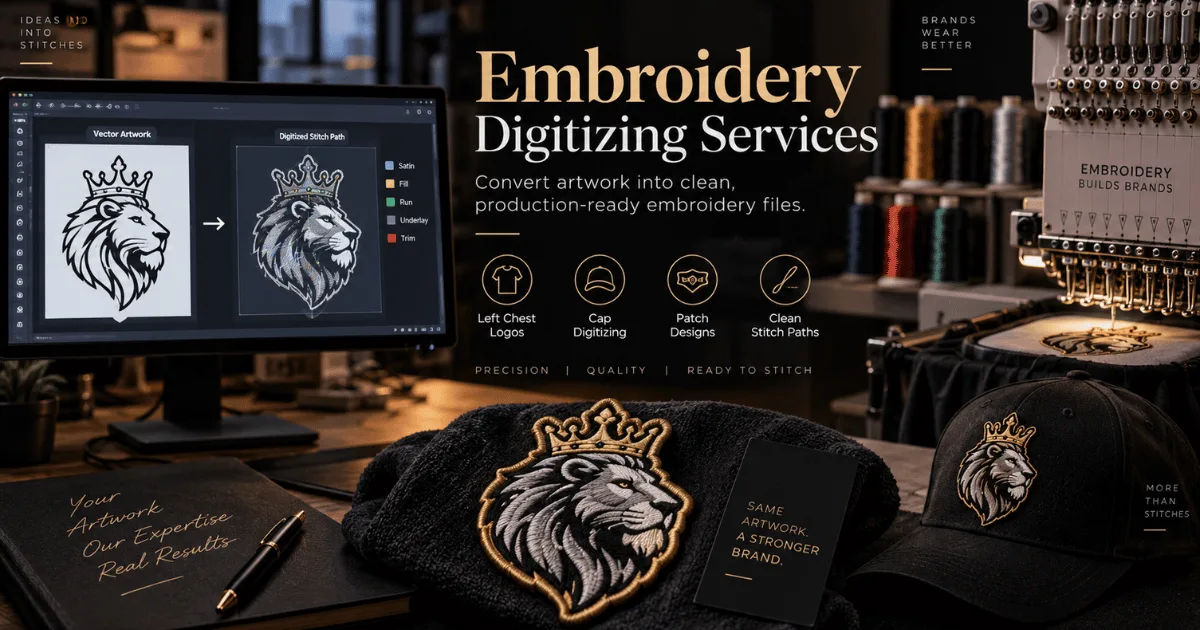
Reliability matters because a digital embroidery file can look perfect on a computer and still produce poor results on fabric. A dependable digitizer understands this difference. They combine technical knowledge, practical embroidery experience, quality control, clear communication, and dependable delivery. This guide explains the main qualities that make an embroidery digitizing service trustworthy and why each quality matters.
What Reliability Means in Embroidery Digitizing
Reliability means more than delivering a file on time. A reliable service consistently produces embroidery files that work as expected, communicates clearly with customers, and corrects problems when they appear.
Embroidery digitizing involves turning artwork into instructions that an embroidery machine can follow. The digitizer decides where stitches begin and end, how sections overlap, which stitch types are appropriate, and how the design should react to fabric.
A reliable provider understands that every design has different needs. A small logo on a cap may require a very different approach from a large jacket-back design. Similarly, lettering, gradients, fine details, and three-dimensional effects can require specialized techniques.
Strong Knowledge of Embroidery Techniques
One of the clearest signs of a dependable service is strong knowledge of embroidery techniques.
Understanding Different Stitch Types
A professional digitizer knows when to use satin stitches, fill stitches, running stitches, and other embroidery methods. Satin stitches can work well for borders and lettering, while fill stitches are often useful for larger areas.
The goal is not to use as many stitches as possible. The goal is to use the right stitches in the right places.
Proper Stitch Direction
Stitch direction affects the appearance and structure of embroidery. Changing stitch angles can help create visual depth, improve coverage, and reduce the risk of fabric distortion.
Reliable digitizers plan stitch directions according to the shape of the artwork and the behavior of the material.
Appropriate Stitch Density
Density must be balanced carefully. Too few stitches can leave gaps and weak coverage. Too many can make the design heavy, stiff, or difficult to sew.
A dependable provider considers fabric type, design size, thread thickness, and stitch type when setting density.
Experience With Different Fabrics
A design does not behave the same way on every material. Cotton, denim, fleece, performance fabrics, caps, jackets, and stretchy garments can all respond differently to embroidery.
Why Fabric Knowledge Matters
Some fabrics are stable and easy to embroider. Others stretch, shift, or show needle marks more easily. A digitizer who understands these differences can adjust the file accordingly.
For example, a design intended for a stretchy shirt may need different compensation and density than the same artwork intended for a structured jacket.
Compensation for Fabric Movement
Fabric can move during stitching. Professional digitizing accounts for this movement through techniques such as pull compensation and suitable underlay.
These adjustments help prevent narrow columns, outlines, or lettering from becoming smaller than intended.
Accurate Conversion of Artwork
Reliable digitizing begins with careful artwork analysis. Simply using an automatic conversion tool may create unnecessary stitches, awkward overlaps, and poor detail.
Manual Editing Makes a Difference
Automatic tools can be useful as a starting point, but professional results often require manual editing. A skilled digitizer can simplify artwork intelligently while preserving its important visual features.
They can also remove unnecessary details that would not translate well into thread.
Preserving the Character of the Logo
A good digitizer knows which elements are essential to the identity of a logo. They preserve important shapes, proportions, and visual hierarchy while adapting the design to embroidery.
This is especially important for business logos, uniforms, promotional products, and branded merchandise.
Quality Control and Test Stitching
Quality control is one of the strongest indicators of reliability.
Why Test Stitching Matters
A digital file should ideally be evaluated through actual stitching, especially when the design is complex, large, small, or intended for an important production run.
Test stitching can reveal problems that are difficult to see on a screen. These may include thread breaks, gaps, excessive density, registration issues, rough edges, or poor lettering.
Reviewing the Finished Sample
After stitching, a professional can compare the physical result with the original artwork. If something does not look right, the digitizing file can be adjusted.
This process creates a useful feedback loop between digital planning and real embroidery.
Consistent File Compatibility
Embroidery machines use different file formats. Common formats include DST, PES, JEF, EXP, and others.
Providing the Correct Format
A reliable service asks which machine or format is required rather than assuming one file will work everywhere.
The correct format helps prevent compatibility problems and ensures that the embroidery machine receives the information it expects.
Clear File Organization
Professional providers should also label files clearly. When customers manage multiple logos, sizes, colors, or revisions, confusing file names can lead to production mistakes.
Clear organization is a small detail, but it demonstrates professionalism.
Dependable Turnaround Times
Time is important in embroidery production. Customers may need files for uniforms, events, product launches, promotional orders, or seasonal campaigns.
Reliable services provide realistic turnaround estimates rather than promising impossible delivery times.
Meeting Deadlines
A provider that consistently meets agreed deadlines is easier to trust. If delays happen, communication should come before the deadline rather than after it.
A realistic promise followed by dependable delivery is more valuable than an extremely fast promise that is frequently missed.
Clear and Professional Communication
Communication is another major part of reliability.
A customer may know what they want visually without understanding technical embroidery terms. A good digitizer explains important decisions in simple language.
Asking Useful Questions
Reliable providers may ask about garment type, final design size, embroidery location, machine format, thread colors, and special effects.
These questions are not unnecessary complications. They help the digitizer create a file suited to the actual production conditions.
Handling Revisions
Sometimes a customer wants a minor adjustment after reviewing a sample. A dependable service has a clear revision process and explains what changes are possible.
Good communication reduces misunderstandings and helps both sides reach the desired result.
Attention to Small Details
Professional embroidery is often judged by details that may seem minor on a screen.
Small Text
Tiny lettering can be difficult to reproduce. If characters are too small or too tightly packed, they may become unreadable after stitching.
An experienced digitizer may simplify letter shapes, adjust spacing, or recommend a larger size when necessary.
Fine Lines and Narrow Shapes
Very thin lines can disappear or become inconsistent during embroidery. A reliable provider evaluates whether a detail can survive the physical stitching process.
Sometimes the best solution is to modify the artwork slightly rather than force an impossible detail into the file.
Strong Customer Reviews and Reputation
Reputation can provide useful evidence about reliability.
Customers should look for consistent feedback rather than focusing on one or two reviews. Reviews that mention stitch quality, communication, revisions, delivery, and customer support can reveal how a provider performs in real situations.
A long history of satisfied customers is encouraging, but customers should still examine recent feedback and examples of completed work.
Transparent Pricing
Reliable services usually explain their pricing clearly.
Embroidery digitizing prices can vary according to design complexity, size, stitch count, required format, and turnaround time. A very simple design may take much less work than a detailed illustration.
Avoiding Unrealistic Deals
An unusually low price may sometimes indicate automated processing, limited quality control, or little manual editing. Price alone should not determine the decision.
The better question is whether the service provides good value for the required level of quality.
Strong Portfolio and Real Samples
A portfolio allows customers to judge a digitizer's ability before placing a larger order.
Look for examples similar to the intended project. If you need small lettering, examine examples containing small lettering. If you need cap embroidery, review cap work. If you need complex logos, look for comparable designs.
A strong portfolio should demonstrate consistency rather than only showcase a few unusually impressive projects.
Security and Protection of Customer Artwork
Businesses often submit original logos, brand assets, and unreleased designs. A trustworthy digitizing provider should treat customer artwork responsibly.
Clear policies about file handling, privacy, and ownership can give customers greater confidence.
This becomes particularly important for companies working with proprietary branding or designs that have not yet been publicly released.
Modern Software and Skilled Human Judgment
Modern digitizing software can improve efficiency, but software does not replace expertise.
Technology as a Tool
Professional software can help digitizers create precise stitch paths, manage objects, edit densities, and prepare multiple formats.
However, the software follows instructions. It does not automatically understand every practical challenge involved in embroidery.
Human Expertise Still Matters
A skilled digitizer evaluates the design from the perspective of the embroidery machine and the final garment. Human judgment is especially valuable when artwork contains unusual shapes, small details, overlapping elements, or difficult fabric requirements.
Reliable Support After Delivery
Good service should not end the moment a file is sent.
Customers may discover that a design needs adjustment after testing it on their specific machine, thread, or fabric. A dependable provider is willing to review the issue and determine whether the file needs modification.
Responsive support can save time and prevent production waste.
What Customers Should Check Before Ordering
Before selecting a provider, customers can use a simple checklist.
First, review the portfolio. Look for designs similar to yours.
Second, ask which file formats are available.
Third, explain the fabric and final embroidery size.
Fourth, ask about turnaround time.
Fifth, clarify the revision policy.
Sixth, determine whether test stitching or quality checking is part of the process.
Finally, evaluate communication. If a provider responds clearly and professionally before the order, that is a useful sign of what future support may look like.
Common Warning Signs of an Unreliable Service
Not every inexpensive or fast service is poor, but certain warning signs deserve attention.
A provider may be unreliable if they refuse to discuss design requirements, cannot explain file formats, make unrealistic turnaround promises, provide inconsistent samples, or avoid questions about revisions.
Another warning sign is a portfolio filled with generic images but very few actual embroidery samples. Customers should also be cautious when a service promises that every design can be converted perfectly without any artwork adjustments.
Embroidery has physical limitations. A trustworthy professional recognizes those limitations and explains them honestly.
Why Consistency Matters More Than One Perfect Design
A best embroidery digitizing services can produce one excellent sample and still be unreliable overall. Consistency is more important.
Businesses often need multiple versions of a logo, several sizes, different garment applications, or repeated orders months apart. A reliable provider should maintain quality across these projects.
Consistency also reduces production problems because customers learn what to expect from the service.
How Reliable Digitizing Saves Money
Quality digitizing is not simply an expense. It can prevent costly production problems.
A poorly prepared file may cause repeated thread breaks, damaged garments, wasted thread, machine downtime, and rejected products. Fixing these problems can cost more than paying for professional digitizing in the first place.
A well-prepared file can help embroidery run more smoothly and produce more consistent results.
The Role of Communication in Long-Term Partnerships
The strongest digitizing relationships are often built over time.
Once a digitizer understands a customer's preferred sizes, fabrics, thread colors, machines, and branding standards, future orders can become easier to manage.
This is valuable for embroidery businesses, apparel companies, promotional-product suppliers, sports teams, and organizations that regularly produce branded clothing.
Choosing the Right Service for Your Project
The best provider depends on the project. A simple one-color logo may not require the same level of specialized work as a detailed jacket-back design.
Customers should match the service to their actual requirements.
If the design includes complex shading, small lettering, 3D puff effects, applique, or unusual fabrics, look for a provider with demonstrated experience in those areas.
If the job is routine but repeated in large quantities, consistency, file organization, and dependable turnaround may become the most important factors.
PSA Digitizing offers reliable embroidery digitizing solutions for businesses, designers, and embroidery enthusiasts. The service converts artwork and logos into ready-to-use embroidery files, including DST, PES, JEF, and other formats. With a combination of experienced craftsmanship and advanced digitizing software, the team creates designs with clean stitching, accurate placement, and professional-looking results.
Operating from Clarkston, Georgia, USA, PSA Digitizing has earned a 4.5+ star rating on Trustpilot and continues to serve customers who value quality and dependable turnaround. Its services include logo digitizing, custom patch designs, and machine embroidery files. The goal is to provide an efficient and straightforward experience from artwork submission to finished embroidery file. Visit psadigitizing.com to start today.
Conclusion
The best embroidery digitizing services are reliable because they combine technical skill with practical embroidery knowledge, careful quality control, clear communication, and consistent customer support. They understand that a successful embroidery file is not simply an image converted into stitches. It is a carefully planned set of instructions designed to work on real fabric with real thread and a real embroidery machine.
Reliable digitizers study artwork before creating the file. They select suitable stitch types, control density, plan stitch direction, account for fabric movement, and preserve important design details. They also understand that different garments and materials may require different approaches.
Test stitching and quality control provide another important layer of reliability. A design that looks good on a computer screen can behave differently when stitched. Reviewing physical samples allows problems to be identified and corrected before larger production runs.
Communication is equally important. A dependable provider asks useful questions, gives realistic deadlines, explains technical issues clearly, and handles revisions professionally. Customers should also consider portfolios, reviews, pricing transparency, file compatibility, artwork security, and after-delivery support.
Ultimately, reliability is about consistency and trust. Customers need to know that their designs will be handled carefully, delivered when promised, and prepared for successful embroidery. By evaluating technical expertise, quality practices, communication, reputation, and customer service together, businesses and individuals can make a more confident choice.
The right digitizing partner can do more than create a file. They can help transform artwork into embroidery that looks clean, stitches smoothly, and represents a brand professionally. That combination of skill, care, and dependable service is what truly makes an embroidery digitizing provider reliable.