
Replacing a roof is a major home improvement project. It involves heavy materials, ladders, tools, elevated work areas, and several people working around your property. Because of these risks, homeowners should pay close attention to whether the roof replacement contractor they hire carries appropriate insurance. 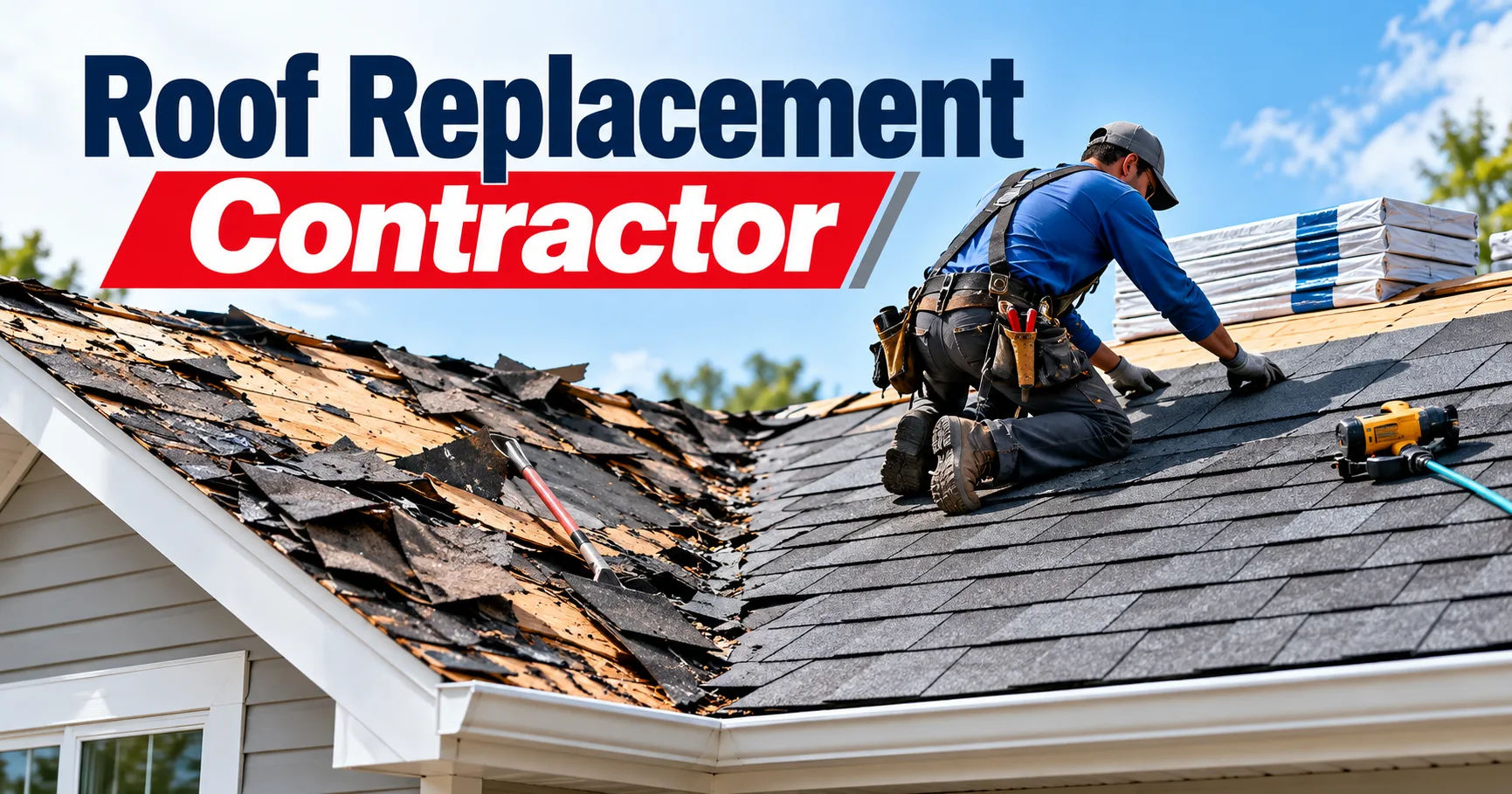 Insurance is not simply another box to check when comparing estimates.
It can help protect homeowners from financial responsibility when something unexpected happens during the project. A worker could be injured, a vehicle could damage your property, or roofing work could accidentally cause damage to another part of the house.
A reputable roof replacement contractor should be willing to explain what insurance coverage they carry and provide documentation when requested. Homeowners should not have to rely solely on a contractor's verbal assurance.
The exact coverage required can vary depending on the location, business structure, project, and type of work being performed. For that reason, checking documentation before work begins is an important part of hiring a roofing professional.
What Does Contractor Insurance Actually Cover?
Contractor insurance is not one single type of protection. Roofing companies may carry several forms of insurance, each designed to address different risks.
Understanding the basic categories makes it easier to ask useful questions before signing a contract.
General Liability Insurance
General liability insurance is one of the most important policies for a roofing business.
It generally helps cover certain claims involving third-party bodily injury or property damage caused by the contractor's business operations. For example, imagine roofing materials fall and damage a homeowner's vehicle.
Another situation could involve a roofing crew accidentally damaging siding, windows, landscaping, or another structure while performing the work.
Depending on the policy and circumstances, general liability insurance may respond to covered claims. However, homeowners should understand that policies have exclusions, limits, and conditions.
This is why simply hearing the phrase "we are insured" is not enough. The homeowner should verify that the contractor actually has current coverage.
Workers' Compensation Insurance
Workers' compensation is particularly important when employees are working on your roof.
Roofing is physically demanding and involves working at heights. Injuries can happen even when workers follow appropriate safety procedures.
Workers' compensation generally provides benefits for covered workplace injuries and illnesses involving eligible employees. The specific requirements depend on local laws and the contractor's workforce.
A homeowner should not assume that every person working on the property is covered simply because a company says it has insurance.
Ask whether workers' compensation coverage applies to the workers who will actually perform the project.
Commercial Auto Insurance
Roofing businesses often use trucks, vans, and trailers to transport shingles, underlayment, tools, ladders, and other materials.
Commercial auto insurance can address certain accidents involving business vehicles. This is different from personal automobile insurance, which may not provide the same protection for vehicles being used primarily for business purposes.
If a roofing company regularly transports equipment and materials, appropriate commercial vehicle coverage is another sign that the business has considered its operational risks.
Additional Insurance Coverage
Some roofing companies may carry other forms of insurance depending on their operations.
For example, they might have coverage related to equipment, tools, rented property, or other business risks. The importance of these policies depends on the nature of the project.
Homeowners do not necessarily need to understand every detail of a contractor's insurance portfolio. The more important issue is making sure the major risks associated with the planned work are appropriately addressed.
Why Homeowners Should Verify Insurance
Hiring an insured roof replacement contractor can reduce some of the financial uncertainty associated with a major construction project.
Without appropriate insurance, a serious accident can become complicated very quickly.
Consider a simple example. A worker is injured while carrying materials across the property. The question of who is responsible may become difficult if the contractor does not have the required workers' compensation coverage.
Another example involves property damage. A roofing crew may accidentally damage a neighboring structure or another portion of the home.
Insurance does not prevent accidents from happening. What it can do is provide financial protection for certain covered events.
That distinction matters.
Insurance should be viewed as one layer of protection rather than a guarantee that every possible problem will be paid for.
How to Ask a Contractor About Insurance
You do not need to be an insurance professional to ask the right questions.
A straightforward conversation can reveal a lot about how professionally the company handles its business.
Ask the roof replacement contractor whether the company carries general liability insurance and workers' compensation coverage where applicable.
Then ask for a current certificate of insurance.
A certificate of insurance is a document that summarizes certain insurance coverage maintained by a business. It can typically show the insurer, policy types, policy limits, and expiration dates.
The certificate is useful because it provides documentation instead of relying on a verbal statement.
Check the Dates
Look at the effective and expiration dates.
A certificate showing expired coverage should not be treated as proof of current insurance.
If the policy is close to expiration, ask whether it will remain active throughout the project.
Check the Coverage Limits
Insurance policies have limits.
A contractor may have liability insurance, but the amount of coverage still matters. Whether a particular limit is appropriate depends on several factors, including local requirements and the size and nature of the project.
Homeowners can ask the contractor or their insurance representative to explain the applicable limits.
Confirm the Contractor's Business Name
The name on the insurance documentation should correspond with the company you are actually hiring.
This is especially important when dealing with businesses that operate under trade names or use subcontractors.
If the company name on the contract and the insurance certificate do not appear to match, ask for clarification before signing.
What If a Contractor Uses Subcontractors?
This is an important question that homeowners sometimes overlook.
A roofing company may hire subcontractors for portions of a project. Those subcontractors can have their own employees, equipment, and insurance arrangements.
Before work begins, ask the roof replacement contractor whether subcontractors will be used.
If subcontractors are involved, ask who is responsible for verifying their insurance coverage.
You can also ask whether the primary contractor remains responsible for coordinating the project and addressing issues that arise from subcontracted work.
The contract should clearly identify the parties involved whenever possible.
Is Insurance the Same as a Roofing Warranty?
No.
Insurance and warranties serve different purposes.
A warranty may address certain workmanship issues or defects in materials, depending on its terms. Insurance generally addresses specific covered risks, such as certain bodily injury or property damage claims.
For example, a workmanship warranty might cover a qualifying installation problem discovered after the project is completed.
That does not mean the warranty functions as liability insurance.
Likewise, having liability insurance does not mean the contractor guarantees every aspect of the roof installation forever.
A homeowner should review both the insurance information and the warranty terms separately.
Does Homeowners Insurance Replace Contractor Insurance?
Generally, homeowners should not think of their own home insurance as a substitute for contractor insurance.
Your homeowners policy may provide coverage for certain events involving your property, subject to the policy's terms, exclusions, deductibles, and limits. However, it was not designed to replace the contractor's business insurance.
Hiring an uninsured contractor can therefore create unnecessary uncertainty.
If an incident occurs, several insurance policies may potentially become relevant depending on the circumstances. Determining which policy applies can become complicated.
The simplest approach is to verify the contractor's coverage before the project starts rather than waiting until something goes wrong.
What Should You Look for Before Signing a Contract?
Insurance should be considered alongside other signs of a legitimate roofing business.
A responsible roof replacement contractor should provide a written contract describing the work.
The contract should ideally explain the scope of work, materials, payment arrangements, approximate project schedule, warranty information, and other important terms.
You should also check whether the contractor has any licensing or registration requirements that apply in your area.
Licensing and insurance are different things.
A company can meet one requirement without necessarily meeting the other.
Verify References and Reviews
Insurance documentation is important, but it does not tell you everything about a contractor's workmanship.
Look for references from previous customers and examine reviews from multiple sources.
Pay attention to patterns rather than one isolated complaint or one glowing review.
You can also ask previous customers about communication, cleanup, scheduling, workmanship, and how the company handled unexpected issues.
Look at the Estimate Carefully
A suspiciously low estimate deserves additional questions.
Price differences can happen for legitimate reasons, including material choices, labor costs, roof complexity, and project scope.
However, a very low bid may sometimes result from omitted work, inadequate staffing, or other cost-cutting measures.
Compare estimates based on what is actually included rather than looking only at the final number.
Warning Signs That Deserve Attention
There are several warning signs homeowners should take seriously.
One is a contractor who refuses to provide proof of insurance.
Another is a document with expired coverage or information that does not match the company you are hiring.
Be cautious if the contractor pressures you to make an immediate decision or insists that documentation is unnecessary.
Another concern is a contract that contains very little detail about the work.
Homeowners should also be careful with contractors who demand unusually large upfront payments without clearly explaining why the money is required.
None of these signs automatically proves that a contractor will perform poor work. However, they justify asking more questions before moving forward.
Can You Verify Insurance Directly?
In many cases, yes.
A homeowner can ask the roof replacement contractor for a certificate of insurance and then contact the insurance agency listed on the certificate to verify that the policy is active.
When doing so, use contact information that you independently verify when practical rather than relying entirely on information provided verbally.
You can ask whether the policy is currently active and whether the certificate accurately represents the contractor's current coverage.
The insurance company may have limits on the information it can disclose because of privacy and business procedures.
Still, independent verification can be useful when a project represents a substantial financial investment.
What About Independent Roofing Workers?
Some roofing businesses work with independent contractors rather than traditional employees.
That arrangement can affect how workers' compensation and other insurance responsibilities are handled.
Do not assume that an independent worker automatically has adequate coverage.
Ask who employs the workers, who is responsible for insurance, and whether the people performing the work are covered.
If a company cannot give you a clear answer, consider obtaining additional clarification before allowing work to begin.
Why Insurance Is Especially Important for Roof Work
Roofing projects carry particular risks because much of the work occurs above ground.
Workers may climb ladders repeatedly, carry heavy materials, operate tools, and move across sloped surfaces.
Weather can also change working conditions quickly.
Even a well-organized crew cannot eliminate every possible accident.
For that reason, choosing an insured roof replacement contractor is an important part of managing the risks associated with the project.
It also demonstrates that the business has taken steps to protect itself and others against certain foreseeable risks.
Questions to Ask Before Hiring
A homeowner can keep the conversation simple by asking a few direct questions.
Ask what types of insurance the company carries.
Ask for a current certificate of insurance.
Ask whether workers' compensation coverage applies to the workers who will be on your property.
Ask whether subcontractors will be used and how their insurance is verified.
Ask whether the company's insurance will remain active during the entire project.
Finally, ask who you should contact if an accident or property-damage issue occurs.
A professional roof replacement contractor should be comfortable answering reasonable questions about these issues.
What Insurance Does Not Guarantee
It is important not to treat insurance as proof that a company is automatically reliable.
An insured contractor can still make mistakes.
A company can also have a valid policy that contains exclusions or conditions that affect a particular claim.
Insurance does not guarantee excellent workmanship, perfect scheduling, honest communication, or satisfaction with the completed roof.
Those qualities require separate evaluation.
Look at the contractor's experience, references, written agreement, workmanship warranty, communication, and overall business practices.
Insurance is one piece of the hiring decision, not the entire decision.
What to Do If a Contractor Says Insurance Is Unnecessary
If a contractor tells you insurance is unnecessary, ask for an explanation.
There may be circumstances where particular types of coverage are not legally required for a certain business arrangement. Requirements vary by location and circumstances.
However, the homeowner should still understand the risks.
Ask what happens if a worker is injured.
Ask who pays if your property is damaged.
Ask whether subcontractors carry their own coverage.
Ask what protections are available if an accident occurs.
A clear answer is much more useful than simply accepting the statement that insurance is unnecessary.
How Insurance Can Protect the Homeowner Indirectly
The value of insurance is not limited to paying claims.
A properly insured business has a financial mechanism for dealing with certain risks associated with its operations.
That can make disputes and unexpected events easier to manage.
It also means the contractor has made a deliberate investment in managing business risks.
When evaluating a roof replacement contractor, this matters because a roof replacement can involve significant labor, expensive materials, and substantial exposure to accidental damage.
The goal is not to find a company that can promise nothing will ever go wrong. No honest contractor can make that promise.
The goal is to hire a company that has sensible systems for dealing with problems when they occur.
Should You Hire an Insured Roof Replacement Contractor?
In general, homeowners should look for a roof replacement contractor with appropriate, current insurance coverage for the work being performed.
Before signing an agreement, verify the coverage rather than simply taking someone's word for it.
Ask for documentation, review the policy information shown on the certificate, and contact the relevant insurer when additional verification is appropriate.
Also remember that insurance is only one part of responsible contractor selection.
You should consider licensing requirements, experience, references, written contracts, warranties, pricing, communication, safety practices, and the use of subcontractors.
Taking these steps may require a little extra time before the project begins, but that time can be valuable.
Conclusion
A roof replacement is a significant project, and choosing the right contractor involves more than comparing prices. Insurance is an important part of the screening process because roofing work involves genuine risks to workers, homeowners, neighboring property, vehicles, and the home itself.
A properly insured roof replacement contractor should be able to provide current documentation showing relevant coverage. Depending on the business and local requirements, this may include general liability insurance and workers' compensation coverage, along with other policies appropriate to the company's operations.
Homeowners should verify the information rather than relying on verbal promises. Check policy dates, confirm the business name, understand the general coverage provided, and ask questions about subcontractors.
At the same time, insurance should not be confused with a workmanship warranty or treated as proof that a contractor is automatically trustworthy. A complete evaluation should include the contractor's experience, references, licensing, contract terms, warranty, communication, and approach to safety.
The basic principle is straightforward: before allowing major roofing work to begin, make sure you understand who is responsible for the work and what insurance protections are in place. Spending a little time verifying those details can help you approach the project with greater confidence and a clearer understanding of your responsibilities as a homeowner.