
A custom uniform manufacturer turns an idea, brand requirement, or workplace need into a finished uniform that employees can wear comfortably and confidently. The process involves much more than simply choosing fabric and sewing pieces together. It includes design planning, measurements, fabric selection, pattern development, cutting, stitching, decoration, quality control, and final packaging.
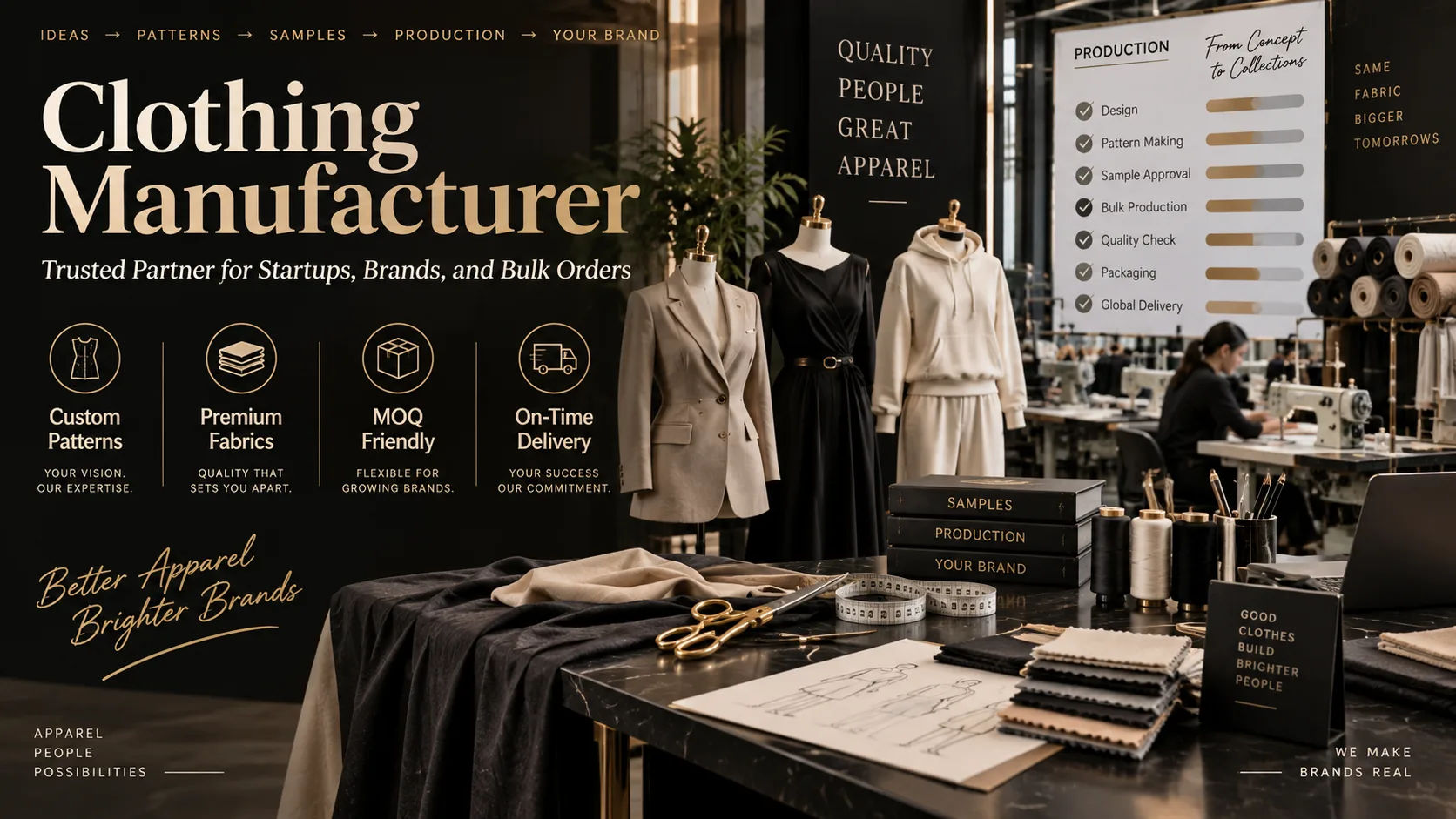
Whether the uniforms are for a hotel, hospital, school, restaurant, security company, sports team, or corporate office, each stage matters. A small mistake in sizing, fabric choice, stitching, or branding can affect how the finished uniform looks and performs.
Understanding how uniforms are made can also help businesses make better decisions when ordering custom clothing. It becomes easier to discuss fabric, colors, designs, quantities, sizing, and production timelines when you know what happens behind the scenes.
Uniform Manufacturing Process
The manufacturing process usually begins long before fabric reaches a sewing machine. The manufacturer first needs to understand what the customer wants to achieve.
A business may provide an existing uniform as a reference, a sketch, photographs, a logo, or simply a description of the desired clothing. The manufacturer then turns those requirements into a practical production plan.
A professional custom uniform manufacturer normally considers the purpose of the uniform, the working environment, expected frequency of use, required durability, preferred appearance, and available budget.
For example, uniforms for restaurant workers need to tolerate frequent washing and movement. Hospital uniforms need comfort and easy maintenance. Corporate uniforms may place greater emphasis on appearance, branding, and a polished fit.
Step 1: Discussing the Design Requirements
The first stage is consultation and design planning.
The customer explains what the uniform should look like and how it will be used. This can include shirts, trousers, jackets, dresses, skirts, vests, coats, aprons, or complete uniform sets.
Important details include the preferred color, collar style, sleeve length, pockets, buttons, zippers, trims, logos, and other design elements.
The manufacturer may also ask about the number of employees, required sizes, expected order quantity, and delivery schedule.
At this stage, clear communication is important. A good custom uniform manufacturer will identify practical issues before production begins instead of discovering them after hundreds of garments have been produced.
Step 2: Creating the Uniform Design
Once the requirements are understood, the design is developed.
Some customers already have a detailed design. Others need help turning a basic idea into a finished garment. Designers can create technical drawings that show the shape, construction, colors, and important details of the uniform.
The design must be attractive, but it also needs to be practical.
A uniform may look excellent in a drawing but become uncomfortable when worn for eight or ten hours. Designers therefore consider movement, pocket placement, sleeve construction, ventilation, fabric weight, and other practical factors.
Step 3: Selecting the Fabric
Fabric selection is one of the most important parts of uniform production.
Different fabrics behave differently. Cotton can provide softness and breathability, while polyester is often valued for durability and easy care. Blended fabrics can combine properties from different fibers.
The right material depends on the environment where the uniform will be worn.
A custom uniform manufacturer may provide fabric samples so the customer can compare texture, weight, appearance, stretch, and color before approving production.
Fabric quality also affects the uniform's lifespan. Choosing a very inexpensive material may reduce the initial price, but it can become more expensive if garments fade, shrink, tear, or lose their shape quickly.
Step 4: Choosing Colors and Brand Details
Uniforms often represent a company's visual identity.
Colors may need to match existing branding. The manufacturer may use color references or approved samples to achieve a consistent appearance across the order.
Branding can be added through embroidery, screen printing, heat transfer, woven labels, patches, or other decoration techniques.
Embroidery is commonly used for logos on shirts, jackets, caps, and other garments because it gives the design a raised, durable appearance.
Printing may be more suitable for larger graphics or designs containing details that would be difficult to reproduce through embroidery.
The best custom uniform manufacturer will consider the garment material, logo size, location, and expected washing conditions before recommending a decoration method.
Step 5: Creating Patterns
After the design is approved, patterns are developed.
A pattern is essentially a template used to create the individual fabric pieces that make up a garment. These pieces may include the front, back, sleeves, collar, cuffs, pockets, waistband, and other components.
Pattern development requires precision because the pattern determines much of the garment's final shape and fit.
For custom orders, patterns may be developed digitally using specialized software. They can then be adjusted for different sizes.
A manufacturer may create a basic sample first and make changes after checking the fit and construction.
Step 6: Making a Sample Uniform
Before large-scale production starts, a sample garment is often produced.
The sample allows the customer and manufacturer to examine the design in real life rather than relying only on drawings.
The fit can be checked, along with the fabric, stitching, pocket position, logo placement, color, buttons, zippers, and overall appearance.
This stage is especially useful for large orders. Correcting a sample is much easier than correcting hundreds or thousands of finished garments.
If changes are needed, the manufacturer adjusts the pattern or construction before moving into bulk production.
Step 7: Preparing the Fabric
Once the sample is approved, production can begin.
Fabric is inspected before cutting. Manufacturers look for visible defects, inconsistent coloring, holes, stains, or other problems that could affect the finished garments.
Depending on the material, fabric may also need preparation to reduce problems such as shrinkage.
The fabric is then arranged in layers for efficient cutting. Careful planning helps reduce waste while ensuring that all pieces are cut accurately.
Step 8: Cutting the Fabric
Cutting transforms large rolls or sheets of fabric into garment components.
The pattern pieces are positioned carefully to make efficient use of the material. Modern production facilities may use computerized cutting equipment, while other manufacturers may use manual or semi-automated methods.
Accuracy is critical.
If one piece is cut incorrectly, it can affect the fit or appearance of the final garment. For this reason, measurements and pattern specifications are checked carefully before and during cutting.
The cut pieces are then organized according to size, garment style, and production batch so they can move efficiently to the sewing stage.
Step 9: Sewing the Uniform
Sewing is where the separate fabric pieces become an actual garment.
Workers or automated machinery assemble the pieces in a specific sequence. The process can include joining the front and back panels, attaching sleeves, sewing collars, installing pockets, adding waistbands, and attaching buttons or zippers.
Different sewing machines may be used for different operations.
Some machines are designed for straight seams, while others handle overlocking, buttonholes, or specialized stitching.
A professional custom uniform manufacturer pays close attention to seam strength because uniforms often experience repeated movement, washing, and daily wear.
Step 10: Adding Logos and Decorations
After or during garment construction, branding elements are added according to the approved design.
The position of a logo matters. A company may specify the left chest, sleeve, back, pocket, or another location.
The decoration must also be properly aligned and securely attached.
For embroidery, thread colors and stitch density need to be controlled. For printed designs, the printing method must be compatible with the fabric.
These details contribute significantly to the professional appearance of the finished uniform.
Step 11: Finishing the Garments
After sewing and branding are complete, garments go through finishing.
Loose threads are trimmed, seams are checked, buttons and zippers are inspected, and garments may be pressed or steamed to improve their appearance.
Labels and care instructions may also be attached at this stage.
The goal is to make the garment ready for inspection and packaging rather than sending it directly from the sewing line to the customer.
Quality Control During Manufacturing
Quality control should take place throughout production, not only at the end.
A custom uniform manufacturer may inspect fabric before cutting, check measurements during production, examine stitching, verify logo placement, and inspect finished garments.
Measurements are particularly important when an order contains many different sizes.
A shirt that is supposed to be a medium should follow the approved measurement specifications consistently. Small differences between garments can become noticeable when an entire workforce wears the uniforms together.
Quality control also looks for problems such as uneven seams, loose threads, incorrect colors, damaged fabric, missing buttons, crooked logos, or faulty zippers.
Final Inspection and Packaging
Once the uniforms pass inspection, they are prepared for delivery.
Garments may be folded, individually packed, grouped by size, or organized according to employee or department requirements.
Large orders need careful organization because hundreds of garments can become difficult to distribute if sizes and styles are mixed together.
The manufacturer may also verify the final quantity against the original purchase order before shipment.
This final step helps ensure that the customer receives the correct products in the correct quantities.
How Long Does Uniform Manufacturing Take?
Production time varies considerably.
A simple order with an established design and readily available fabric may move relatively quickly. A highly customized order requiring new patterns, special materials, unusual colors, or extensive branding can take considerably longer.
The order quantity also matters. Producing a small batch and producing several thousand uniforms require different production planning.
A reliable custom uniform manufacturer should provide a realistic timeline rather than promising an extremely short turnaround without considering the actual production requirements.
Samples, design approvals, fabric availability, revisions, production, quality control, and shipping can all affect the final delivery date.
What Affects the Cost of Custom Uniforms?
Several factors influence the price of a custom uniform.
Fabric is one of the biggest considerations. Premium or specialized materials generally cost more than basic fabrics.
Design complexity can also increase costs. Additional pockets, special stitching, custom trims, complicated patterns, and unusual construction methods require more production time.
Branding affects the price as well. A simple embroidered logo may cost less than a large, detailed design requiring multiple processes.
Order quantity is another important factor. Larger orders can sometimes reduce the per-unit manufacturing cost because setup and production expenses are distributed across more garments.
The custom uniform manufacturer may also consider packaging, labeling, sampling, shipping, and other services when calculating the final quotation.
Why Proper Sizing Matters
Sizing is often underestimated when organizations order uniforms.
Employees come in different body shapes and proportions, so a standard size chart may not provide the perfect fit for everyone.
Manufacturers can use established size ranges or develop measurements based on the customer's requirements.
A good uniform should allow enough movement without appearing excessively loose. Work uniforms also need to accommodate the activities employees perform during the day.
For large organizations, collecting accurate size information before production can prevent expensive exchanges and alterations.
What Makes a Good Uniform Manufacturer?
Choosing a manufacturer should involve more than comparing prices.
Look at the manufacturer's ability to understand specifications, maintain consistent quality, handle the required order volume, communicate clearly, and meet agreed production schedules.
Experience with similar garments can also be valuable.
A manufacturer that regularly produces healthcare uniforms may understand functional requirements that a manufacturer focused mainly on fashion garments may not.
The custom uniform manufacturer should also be able to explain fabric choices, sampling procedures, decoration options, sizing, quality checks, and production timelines clearly.
Common Mistakes to Avoid
One common mistake is approving a design without testing a physical sample.
Another is selecting fabric based only on price. The cheapest material is not always the most economical choice over the life of the uniform.
Businesses can also run into problems by providing unclear logo files, incomplete size information, or unrealistic delivery expectations.
Skipping quality checks is another risk. A large uniform order represents a significant investment, so checking the sample and production specifications before approving bulk manufacturing is worthwhile.
Conclusion
A uniform may appear simple when it is hanging on a rack, but producing it involves a carefully coordinated series of steps. Design requirements must be translated into patterns, appropriate fabric must be selected, fabric must be accurately cut, and individual pieces must be assembled with consistent stitching.
Branding, finishing, quality control, packaging, and delivery are equally important. Every stage contributes to how the finished garment looks, fits, performs, and lasts.
Working with an experienced custom uniform manufacturer can make the process easier because the manufacturer can help identify practical problems before they become expensive production issues. The best results usually come from clear specifications, suitable materials, accurate sizing, approved samples, realistic timelines, and consistent quality checks.
For businesses ordering uniforms, understanding the manufacturing process provides a useful advantage. Instead of looking only at the final price, you can evaluate what goes into that price and whether the manufacturer is capable of delivering garments that meet your actual requirements.
Ultimately, good custom uniforms are the result of careful planning rather than a single manufacturing step. When design, fabric, construction, branding, fit, and quality control are handled properly, the finished uniforms can provide employees with comfortable clothing while presenting a consistent and professional image for the organization.