
A private label uniform manufacturer works behind the scenes to turn a company’s uniform concept into finished clothing that carries the customer’s own brand, colors, labels, and design details. 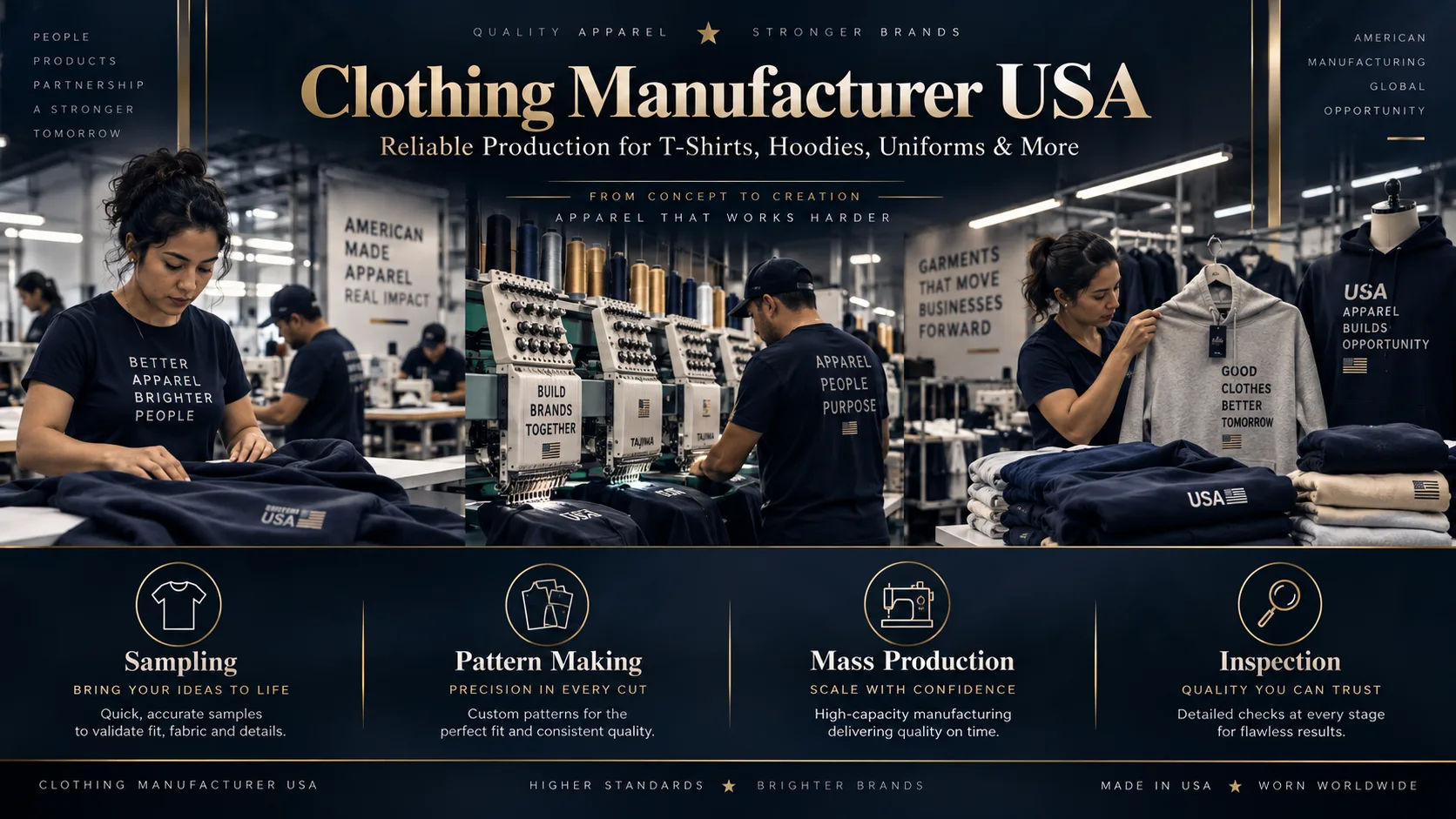 Instead of purchasing generic uniforms and adding a logo afterward, businesses can work with a manufacturer to develop garments specifically for their workforce, industry, and brand identity.
The process can look complicated at first, but it usually follows a clear sequence. The manufacturer handles product development, fabric sourcing, pattern making, sampling, branding, production, quality control, packaging, and delivery. For businesses that want consistent uniforms across multiple locations or departments, this approach can be much more practical than repeatedly buying ready-made garments.
A reliable custom uniform manufacturer also gives businesses more control over details such as fabric weight, fit, stitching, colors, pockets, closures, embroidery, printing, and private labels. This makes private label manufacturing especially useful for companies that want their uniforms to look professional rather than like standard catalog products.
What Is a Private Label Uniform Manufacturer?
A private label uniform manufacturer produces uniforms that are sold or used under another company’s brand name. The manufacturer may produce the physical garments, but the customer’s brand appears on the finished product.
For example, a hotel might need shirts, trousers, jackets, and aprons for its employees. Instead of purchasing standard hotel uniforms, the hotel can provide its preferred design and branding requirements to a manufacturing partner.
The manufacturer then develops the garments according to those specifications.
The finished uniforms may carry the hotel’s woven labels, logo, brand colors, employee names, or other identifying details. The manufacturing company may not appear anywhere on the garment.
This is the basic idea behind private labeling.
How the Private Label Process Works
The manufacturing process normally starts long before fabric is cut.
A business first communicates its requirements to the manufacturer. These requirements can include the type of uniform, expected quantities, target price, preferred materials, colors, sizing, branding, and delivery schedule.
A good manufacturer asks practical questions at this stage because small decisions can affect the entire production run.
1. Understanding the Uniform Requirements
The first step is understanding exactly what the customer needs.
A restaurant may require breathable shirts and stain-resistant aprons. A construction company may need durable work shirts and reflective jackets. A healthcare organization may prioritize comfort, easy washing, and fabric performance.
The manufacturer needs to understand how the uniform will actually be used.
This is where an experienced custom uniform manufacturer can add value. Instead of simply copying a picture, the manufacturer can recommend materials and construction methods that make sense for the working environment.
The manufacturer may also ask about the number of employees, gender-specific sizing, seasonal requirements, and whether different departments need different garments.
2. Design Development
After the requirements are understood, the design is developed.
Some businesses already have complete technical drawings. Others only have a basic idea, reference photograph, logo, or sketch.
The manufacturer can turn that information into a workable garment specification.
Design decisions can include collar shape, sleeve length, pocket placement, cuffs, buttons, zippers, waist construction, vents, lining, and garment length.
At this stage, the manufacturer also considers whether the proposed design can be produced efficiently at the required quantity.
A design may look excellent on paper but become unnecessarily expensive or difficult to manufacture because of complicated construction.
Choosing the Right Fabric
Fabric selection is one of the most important decisions in private label uniform production.
Uniforms are usually washed more frequently than ordinary fashion clothing. Employees may wear the same garments several times a week, so durability matters.
Common choices include cotton, polyester, cotton-polyester blends, twill, poplin, oxford fabrics, stretch materials, and performance fabrics.
The right option depends on the job.
A cotton-rich fabric may provide comfort, while polyester can improve durability and wrinkle resistance. A blended fabric can provide a balance between both.
For outdoor workers, moisture management and abrasion resistance may matter more than softness.
For office uniforms, appearance, comfort, and easy maintenance may be the bigger priorities.
A knowledgeable custom uniform manufacturer should explain these trade-offs instead of simply recommending the cheapest fabric.
Creating Samples Before Bulk Production
Sampling is one of the most important stages because it gives the customer an opportunity to inspect the actual product before placing a large production order.
The manufacturer creates a sample based on the agreed specifications.
The customer can then check the fit, fabric, color, stitching, logo placement, pocket size, buttons, trims, and overall appearance.
This is where many potential problems can be discovered.
A shirt might look perfect in a digital design but feel too tight around the shoulders. A pocket might be positioned too low for practical use. A logo might look better when reduced slightly.
These issues are much easier to correct during sampling than after hundreds or thousands of garments have been produced.
Pattern Making and Grading
Once the sample is approved, the manufacturer develops production patterns.
A pattern is essentially the template used to cut different pieces of fabric for the garment.
The pattern must account for the approved measurements and construction details.
For uniforms, size grading is especially important. Employees will not all have identical body shapes, so the manufacturer needs a practical size range.
A professional manufacturer creates consistent measurements between sizes rather than simply enlarging or shrinking the garment without considering how the body changes.
For larger orders, accurate grading helps ensure that employees receive uniforms with predictable fits.
Branding and Private Labels
Private labeling is what makes this manufacturing model particularly useful for businesses building a professional identity.
The customer can provide its logo and brand guidelines. The manufacturer may then apply the branding through embroidery, screen printing, heat transfer, woven labels, printed labels, patches, or other methods.
The choice depends on the garment and the desired appearance.
Embroidery works well for many shirts, jackets, caps, and outerwear products. Printed branding can be useful for larger graphic designs. Woven labels provide a clean branded appearance inside the garment.
A custom uniform manufacturer may also produce custom neck labels, size labels, care labels, packaging stickers, and branded bags.
This allows the entire presentation to feel consistent.
Bulk Production
After the sample receives final approval, bulk production begins.
The manufacturer purchases or allocates the required fabric and trims. Production teams then move through cutting, sewing, branding, finishing, inspection, and packing.
Cutting must be accurate because small measurement errors can create problems across an entire batch.
The fabric is usually arranged in layers before being cut according to the production patterns.
The cut pieces then move to sewing operations.
Different workers or machines may handle different construction stages, depending on the factory's production system.
For large uniform orders, organized production is essential because consistency matters as much as speed.
Quality Control During Production
Quality control should not happen only at the very end.
A strong manufacturer checks products at several stages.
Fabric may be inspected before cutting. Cut panels can be checked for accuracy. Sewing operations can be monitored for loose threads, uneven seams, incorrect measurements, or skipped stitches.
Finished garments are then inspected before packing.
Typical quality checks include garment measurements, color consistency, logo positioning, stitching quality, closures, fabric defects, and overall appearance.
This is particularly important for corporate uniforms because inconsistent garments can make a company look less professional.
A dependable custom uniform manufacturer should have a defined inspection process rather than relying entirely on visual checking at the packing table.
Managing Large and Repeat Orders
Uniform requirements often change over time.
A company might order 500 shirts initially and then need another 150 several months later because of new employees, replacements, or expansion.
This makes repeat-order management an important part of private labeling.
The manufacturer should maintain the approved specifications, patterns, fabric information, branding files, and size details.
When a reorder is placed, these records help reproduce the original garments more consistently.
However, there is one important issue: fabrics and trims can change between production periods.
A manufacturer should communicate if the original material is no longer available or if a replacement has slightly different characteristics.
Blindly substituting materials can cause noticeable differences between old and new uniforms.
Minimum Order Quantities
Minimum order quantity, commonly called MOQ, is another important part of the process.
Manufacturers set MOQs because producing custom garments involves setup costs.
Creating patterns, preparing embroidery files, sourcing fabrics, cutting materials, and setting up production equipment takes time regardless of whether the customer orders 20 pieces or 2,000.
Some manufacturers specialize in large corporate orders, while others are more flexible with smaller private label runs.
Businesses should ask about MOQ before investing heavily in design development.
A custom uniform manufacturer that offers flexible production may be a better fit for startups, smaller companies, or organizations testing a new uniform program.
Packaging and Delivery
Private label manufacturing does not necessarily end when the garments are sewn.
The manufacturer can often handle folding, tagging, individual packaging, carton packing, and shipment preparation.
Businesses may request garments to be separated by size, department, employee, or location.
For companies with multiple branches, this can make distribution easier.
For example, an organization with five offices might request separate cartons for each location. That can reduce the amount of sorting required after delivery.
Delivery planning should also consider production time, fabric availability, branding requirements, quality inspection, and shipping arrangements.
What Makes a Good Private Label Manufacturer?
Not every clothing factory is equally suitable for uniform production.
The right partner should have experience with the type of garments being ordered.
A manufacturer producing fashion garments may not automatically understand the demands of industrial or healthcare uniforms.
Businesses should look for clear communication, consistent sampling, transparent pricing, realistic lead times, production capacity, and quality-control procedures.
It is also useful to ask how the manufacturer handles defective products, size problems, fabric shortages, and urgent repeat orders.
A good custom uniform manufacturer will usually discuss potential production problems before they become expensive surprises.
Cost Factors in Private Label Uniforms
Private label pricing depends on several factors.
Fabric is often one of the biggest cost components. More expensive or specialized fabrics naturally increase the garment price.
Construction complexity also matters. A simple polo shirt is generally easier to produce than a fully lined jacket with multiple pockets, zippers, panels, and branded components.
Other factors include order quantity, embroidery, printing, labels, packaging, trims, sample development, and shipping.
Higher quantities can sometimes reduce the per-unit manufacturing cost because setup expenses are distributed across more garments.
However, businesses should avoid choosing a supplier based only on the lowest quotation.
A cheaper uniform that fades, shrinks, tears, or loses its shape quickly can cost more over time.
Private Label Versus Ready-Made Uniforms
Ready-made uniforms are convenient because they are already designed and available.
They can work well for businesses that need small quantities quickly.
Private labeling takes more planning, but it offers considerably more control.
The customer can influence fabric, colors, measurements, branding, construction, packaging, and overall appearance.
This makes private label production particularly attractive to established businesses that want uniforms to become part of their visual identity.
A custom uniform manufacturer can also make adjustments that standard uniform suppliers usually cannot provide.
For example, a company may need longer shirt lengths, additional pockets, specific sleeve designs, or a unique color that is not available in standard catalogs.
Common Mistakes Businesses Should Avoid
One common mistake is approving a sample without testing it in real working conditions.
A uniform should be worn, washed, moved in, and evaluated if possible.
Another mistake is focusing entirely on appearance.
A beautiful uniform can still be uncomfortable or impractical if employees have to wear it for eight or ten hours.
Businesses should also avoid changing specifications after production has started.
Late changes can increase costs and delay delivery.
Finally, companies should not assume that every manufacturer will automatically preserve the same specifications for future orders. Approved samples, measurements, fabric references, color standards, and branding files should be documented.
How to Build a Long-Term Manufacturing Relationship
The best private label relationships are not based on one order.
Once a manufacturer understands a company’s products, sizing, branding, quality expectations, and delivery requirements, future orders can become easier.
Businesses should keep a record of approved samples and production specifications.
They should also communicate changes clearly rather than relying on informal messages that can be misunderstood.
Regular quality reviews can help both sides identify problems early.
Over time, a dependable custom uniform manufacturer can become an extension of the company's supply chain rather than simply another clothing vendor.
That relationship can be especially valuable when the business expands into new locations or introduces new uniform styles.
Conclusion
A private label uniform manufacturer takes a business from a basic uniform idea to a finished branded garment. The process usually includes requirement planning, design development, fabric selection, pattern creation, sampling, branding, bulk production, quality control, packaging, and delivery.
The biggest advantage is control. Businesses can create uniforms around their actual working environment instead of adjusting employees to whatever standard products happen to be available.
The process also requires more planning than buying ready-made garments. Samples need to be tested, materials need to be approved, branding needs to be checked, and production specifications need to be documented.
Choosing the right custom uniform manufacturer can make those steps much easier. A capable partner understands that uniforms are not simply pieces of clothing. They need to represent the company, survive repeated use, fit different employees, remain practical throughout the workday, and maintain a consistent appearance across orders.
For businesses planning regular uniform purchases, private label manufacturing can therefore be a practical long-term solution. The key is to treat the manufacturer as a production partner, communicate specifications clearly, test samples properly, and prioritize reliable quality over a tempting low initial price.